
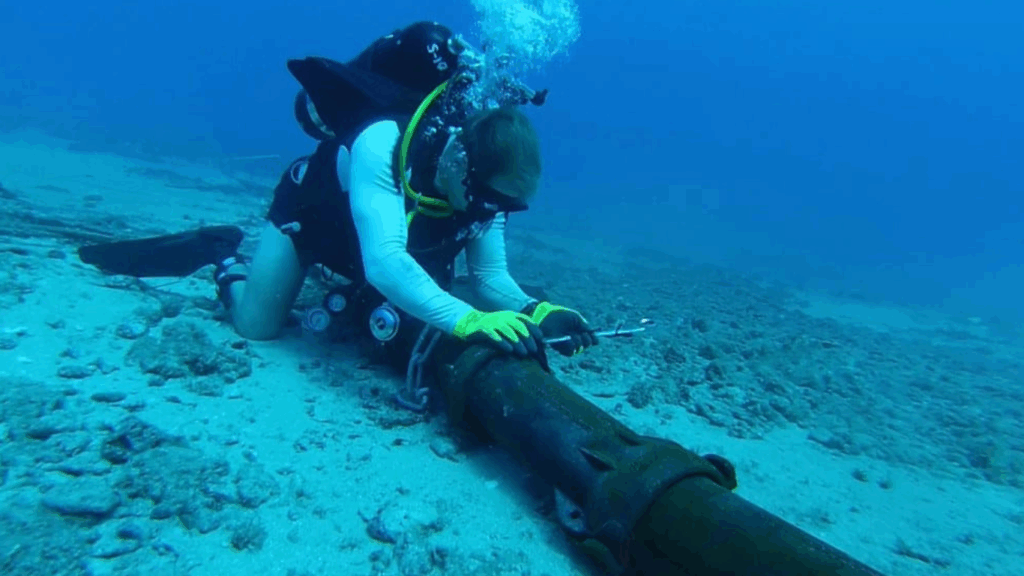
The world’s undersea cable infrastructure, which forms the invisible backbone of global communication and internet connectivity, is increasingly under threat from deliberate attacks and sabotage. Recent incidents have raised alarms among global leaders, defense agencies, and infrastructure experts. In late 2024 and early 2025, several undersea fiber-optic and power cables across the Baltic Sea, Red Sea, and other strategic regions were damaged in ways that are widely suspected to be intentional. These cables, which transmit over 95% of global internet traffic, are crucial to the functioning of global finance, telecommunications, and national security.
One of the most high-profile incidents occurred when the Russian-linked vessel Eagle S was seen dragging its anchor across the C-Lion1 cable between Finland and Germany. This followed a similar case involving the Chinese ship Yi Peng 3, which was near damage sites along other Nordic cables. Authorities in Finland, Estonia, and Sweden have since opened sabotage investigations. In the Red Sea, ongoing maritime conflict near Yemen led to multiple cable outages between Europe and Asia, disrupting services and highlighting the vulnerabilities of cable routes running through tense geopolitical waters. Though some of these disruptions could be attributed to accidental anchoring, the growing pattern and timing of these incidents suggest that sabotage may be a strategy in modern hybrid warfare.
In response, governments are accelerating the deployment of protective measures. NATO, in cooperation with the EU, has launched maritime surveillance operations and underwater drone deployments aimed at monitoring cable routes and identifying suspicious activity. New funding initiatives are being rolled out to support rapid repair response teams and infrastructure redundancy. In the United States, Congress has requested that major tech companies disclose their security measures for undersea cables, while the FCC has proposed banning Chinese-made equipment in U.S. cable networks to minimize foreign espionage threats. The UK is moving to modernize its defense laws to include gray zone tactics such as cyber sabotage and covert infrastructure attacks.
The rising frequency of undersea cable incidents—46 in 2024 alone—underscores the fragility of these deep-sea lifelines. Given that they are often accessible in international waters, with minimal physical protection, they are easy targets for state and non-state actors. A single cable cut can isolate countries, crash stock exchanges, or even cause regional blackouts in connectivity. What was once an overlooked engineering marvel is now at the forefront of national security discussions. The strategic importance of these cables is no longer in question—they are critical assets in the 21st-century digital warzone.
Sources
- Risk of undersea cable attacks backed by Russia and China likely to rise, report warns
https://www.theguardian.com/technology/2025/jul/17/risk-undersea-cable-attacks-backed-russia-china-likely-rise-report-warns - NATO, EU on high alert as undersea cable attacks escalate in Baltic
https://www.voanews.com/a/nato-eu-on-high-alert-as-undersea-cable-attacks-escalate-in-baltic/7956600.html - Submarine cables face increasing threats (Recorded Future report)
https://www.recordedfuture.com/research/submarine-cables-face-increasing-threats - Red Sea attacks highlight threat to global submarine cables
https://www.russell.co.uk/RussellThinking/Risk/2936/red-sea-attacks-highlight-threat-to-global-submarine-cables - Lawmakers want US tech CEOs to address concerns about submarine cables
https://www.reuters.com/business/media-telecom/lawmakers-want-us-tech-ceos-address-concerns-about-submarine-cables-2025-07-21 - UK looking to revamp defense laws as undersea cable sabotage and cyber attacks create ‘gray zone threats’
https://www.pcgamer.com/hardware/uk-looking-to-revamp-defense-laws-as-undersea-cable-sabotage-and-cyber-attacks-create-gray-zone-threats